Updated: September 9, 2025
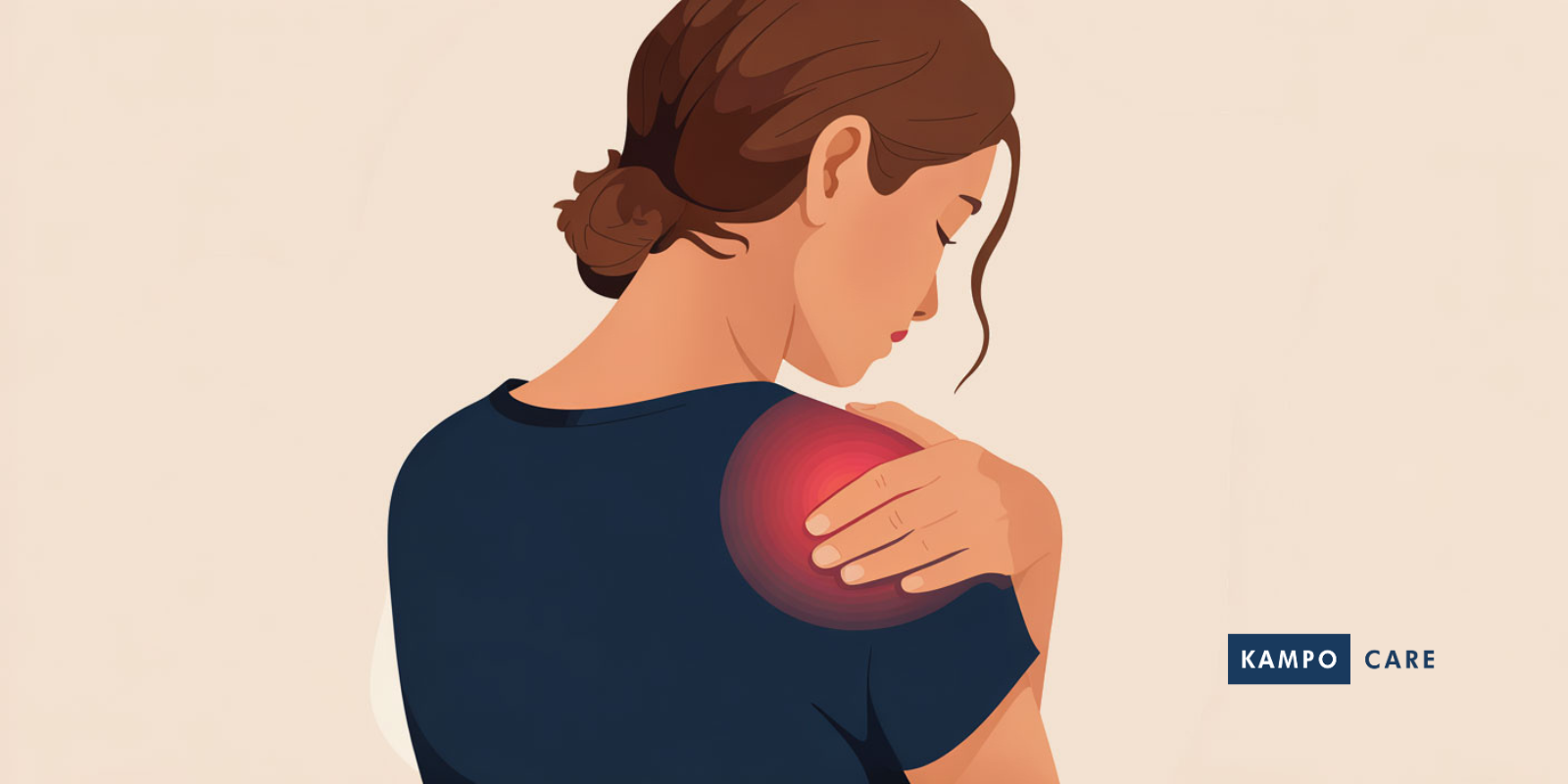
Frozen shoulder, or adhesive capsulitis, is a condition where the shoulder becomes stiff, painful, and hard to move due to inflammation and tightening of the joint capsule. It develops gradually and may take months or even years to heal.
It’s commonly called 50-year-old shoulder (Gojukata / 五十肩) in Japan, which reflects its typical onset in people in their 50s and the cultural awareness of age-related shoulder stiffness.
Women are 2 to 4 times more likely to develop frozen shoulder than men. It’s also more common in people with diabetes, thyroid issues, or those recovering from shoulder immobility.
Common symptoms include:
- Limited mobility due to stiffness and discomfort
- Severe pain when raising or rotating the arm
- Throbbing pain at night that can disrupt sleep
Kampo Self-Check for Frozen Shoulder
Qi and Blood Stagnation
Cold-Damp Accumulation
Liver and Kidney Deficiency
Kampo Perspectives for Frozen Shoulder
Qi and Blood Stagnation
Smooth circulation of Qi and Blood is essential for joint health. When this flow is blocked, due to stress, overuse, or injury, stagnation occurs, causing sharp, localized pain and stiffness, especially when raising or rotating the arm.
- Western medicine Link – The Kampo’s view reflects chronic inflammation, reduced microcirculation, or soft tissue adhesions. Poor blood flow and muscle tension can restrict movement and prolong recovery.
- Tea Care – Safflower & Rose Tea is commonly used to promote blood circulation, relieve tension, and ease emotional stress. It’s especially helpful for sharp, fixed shoulder pain worsened by stress or past injury.*
Cold-Damp Accumulation
Cold and Dampness can invade the joints, especially in people with weak constitutions or after exposure to cold environments. This leads to dull, heavy shoulder pain and stiffness that worsens in cold or humid weather.
- Western medicine Link – The Kampo’s view mirrors weather-sensitive joint pain seen in arthritis or degenerative joint disease. Cold temperatures may reduce blood flow and tissue elasticity, increasing stiffness and discomfort.
- Tea Care – Ginger Tea is a classic remedy to warm the body, improve circulation, and dispel internal cold and dampness. It’s ideal for dull, heavy shoulder pain that worsens in cold or humid weather.*
Liver and Kidney Deficiency
In Kampo theory, the Liver and Kidneys are believed to nourish the tendons and bones. As these organs weaken with age, the body’s ability to repair tissues declines. This results in gradually developing symptoms such as chronic, deep aches and restricted shoulder movement.
- Western medicine Link – The Kampo’s view reflects age-related degeneration like tendon breakdown, reduced hormone levels, and slower healing, often seen in older adults or those with chronic fatigue.
- Tea Care – Goji Berry & Jujube Tea is widely used to nourish the blood, support the liver and kidneys, and ease fatigue. It’s suited for chronic, deep aches and gradual stiffness, especially in older adults or those with low energy.*
Kampo Therapy Q&A
Q: How does Kampo therapy approach frozen shoulder?
Kampo sees frozen shoulder as more than a joint issue—it reflects internal imbalances like poor circulation, cold retention, or organ deficiency that hinder healing. Treatment is tailored to the root cause.
Q: How is it different from Western treatment?
Q: Can Kampo therapy be combined with Western care?
Yes. Kampo can complement physical therapy and medications by supporting the body’s healing from the inside, reducing side effects and improving long-term outcomes.
The information on this page is for educational purposes only and is not intended to diagnose, treat, cure, or prevent any disease. Instead of self-diagnosing, we encourage you to consult a qualified healthcare provider for proper guidance and care.